Sunday, February 7, 2021

What is Tibetan Singing Bowl and How It's Working?

Tibetan singing bowls are a type of bell that vibrates and produces a rich, deep tone when played. Also known as singing bowls or Himalayan bowls, Tibetan singing bowls are said to promote relaxation and offer powerful healing properties. Tibetan singing bowls in meditation practice.

In addition, some wellness practitioners (including music therapists, massage therapists, and yoga therapists) use Tibetan singing bowls during treatment.

How Tibetan Singing Bowl Works?

There are a few different theories that have been proposed to explain why Tibetan singing bowls might be beneficial. Such theories suggest that:

  • The vibrations that the bowls produce may affect the mind and body.
  • The sounds the bowls create may impact brain waves in order to induce relaxation.
  • They may induce the same psychological effects and benefits as listening to music.

Some of the possible uses for singing bowl therapy include:

Stress relief, Improving sleep, Lowering blood pressure, Reducing depression, Stimulating the immune system, Pain relief, Balancing and harmonizing the body, Enhancing other healing practices.

How to Use Tibetan Singing Bowls?

To create sound with a singing bowl, firmly press the accompanying mallet in a circular motion against the bowl’s outside edge or rim. When you hear a bright, clear tone, you can slow down the motion. Use your full arm to make the motion, rather than just rotating your wrist.

You can also make the same circular motion against the outside belly of the bowl. Additionally, you can gently stroke the bowl before beginning the circular motion.

Wednesday, February 3, 2021

How to Use Sound Healing in Your Life

There are a handful of ways to use sound therapy for your own personal healing. The most popular techniques that are being used today are:

1) Singing Bowls & Bells
Whether made out of Tibetan metal or quartz crystal, singing bowls make a soothing ringing sound when a felt-tipped mallet is rubbed around the edge. Rhythms can also be produced by striking the edge of the bowls and bells. The vibrations and tones that are emitted can slow down breathing, brain waves, and heart rates. This produces a deep sense of calm and well-being.

2) Gong Bath
A gong bath is an ancient Asian sound healing technique in which the participant is surrounded by gongs that are struck. Gong baths feel like massages because they vibrate all of the water within the body, which produces an amazing sense of well-being.

3) Om Chanting
The sacred, familiar “aum” is known as the mother tone, which comprises the frequencies of all other sounds. Repetitive chanting of this tone is the first step to meditation. Research shows that chanting can stabilize heart rate, lower blood pressure, produce endorphins, help the mind focus, and alleviate stress levels.

4) Humming
This simple sound greatly affects our emotion. It can keep us healthy by reducing stress, enhancing sleep, and producing happy chemicals in the brain such as oxytocin. It can also improve airflow between the sinuses and the nasal cavity, which helps circulate oxygen throughout the body, and can protect the health of sinuses.

5) Classical and Soothing Music
Classical and soothing music can be used to enhance learning and creativity, for pregnancy and child development, and to help alleviate high blood pressure and muscle tension.

6) Kirtan
Kirtan is a form of music that narrates, recites, tells, and describes an idea of a story. In a kirtan practice, a leader sings the mantra and the audience sings it back. Through this exchange, the audience is able to connect with each other. Kirtan allows for meditation, free expression, giving and receiving, and safe vulnerability. These abilities lead to inner healing.

Our bodies, minds, and spirits always want to be in a state of balance, yet outer stimuli and noises can distract and prevent us from maintaining a state of harmony. Sound has the power to bring us to the source of the inner peace we all desire.

The Dos And Don’ts Of Playing A Singing Bowl


New to singing bowls? Haven’t gotten around to playing lately? Help is here for those who need a refresher course and a nudge in the right direction. Read our quick rundown of eight singing bowl tips.

DO begin with intention

We love how perfectly sized our Tibetan singing bowls are for portability. It’s easy to whip it out for a grounding, centering moment in the middle of a hectic day. But it’s just as important to take the time to settle into some singing bowl sessions. Especially if you’re just beginning or want to play for a longer stretch of time.

Move to a quiet area and select a comfortable upright posture. Close your eyes, take a few deep belly breaths, and fully arrive at the present moment.

DO try different techniques

Everyone at Silent Mind has a “default” way of playing. Some strike their bowls a lot, some quick play the rim clockwise, others slowly play the rim counterclockwise. Having a preference, or way of playing that feels natural, is great. Still, mix it up at times and try other techniques for playing. You’ll be amazed at your bowl’s range.

DO stay close to the rim

Pay attention to where your arm is positioned before it meets the bowl. It’s best to keep it relaxed, down, held close to the side/rim of the bowl. Beginning by holding it far above the bowl or stretched out to the side to swing in might lead to rattling or inconsistent sounds.

DO take proper care of your bowl

The daily environment and general long-term conditions a bowl is kept in will impact the sound. You should keep your bowl free of dust and prolonged moisture, and use only pure lemon juice and water to cleanse it. Brush up on our top ten tips for keeping your singing bowl beautiful for ages.

DON’T let your fingers touch the sides

Dull sounds that don’t resonate? Make sure you’re not touching the sides of the bowl as you play. Even though you’re not striking that area, the sound comes from the entire bowl. It needs to remain free and clear of fingers in order to generate those good vibrations.

DON’T lose your cushion

When we sit in meditation, we let our head balance or float effortlessly on top of an aligned spine. Think of your cushion as a spine for your singing bowl. Ours aren’t just decorative; they are designed to perfectly balance a singing bowl in the palm of your hand. This also helps moderate how rough we are with our instrument.

DON’T grip your striker too tightly

Speaking of rough, avoid tensing up as you grip your striker. A tight grip makes it more difficult to sustain the song as you play the rim. Plus, it’s not very relaxing. Unlike some other instruments, we do not need to hold tension anywhere in the body to play a singing bowl.

DON’T forget to practice

People love how easy it is to play singing bowls. But we understand that not everyone will take to it like a duck to water. There’s no shame in having to practice with your singing bowl. It helps refine technique and locate the best possible sound of each unique bowl.

Monday, August 10, 2020

New From Silent Mind: Mindful Intentions Sound Therapy Tracks


Silent Mind loves coming up with more purposes for singing bowls, and occasions to play them. That’s a huge reason we’ve made them the perfect size. They can go wherever peace and harmony are needed.

Yet it must be acknowledged that no, it isn’t always a good time to play the Tibetan singing bowl, and we’re not just talking about driving. You probably don’t want to play the singing bowl when:

  1. Riding public transportation. I mean, we’re sure it would be beneficial, but not everyone would appreciate it.
  2. In the midst of a yoga or meditation practice. We use singing bowls at the end and beginning all of the time, but we are otherwise occupied in between.
  3. In the middle of the night. When you wake up and desperately want to go back to sleep, playing an instrument is hardly an activity you want to go for.

However, these are all instances where singing bowl sound therapy can really help. Commutes are stressful, healing practices are improved with singing bowl sounds, and you want to be lulled back to sleep.

For all of the times when your bowl and striker are a hindrance more than a help, Silent Mind has begun rolling out a soothing, satisfying series of sound healing meditation tracks.

Chakra Meditations

The centerpiece of our first sound healing audio collection would be the chakra sessions. Each of the seven chakras is addressed with the appropriate frequency to create an immersive experience. We feel that meditators of all levels will appreciate how complex, entrancing, and at times, totally relaxing these specific tracks are. At the end of your short session, check-in with your body and mind, and note what has shifted.

Also, these meditations are suitable for those who don’t know much about chakras. In fact, you don’t have to have any interest in the concept of chakras to benefit. You can enjoy them simply as ambient tracks that go from daily background music to evening meditation.

Bonus Meditations

The sound of a singing bowl is a great complement to soothing human voices, as well as nature sounds. Our additional tracks from this premier release include a stunning vocal-assisted meditation, and a forest-themed sound therapy session.

You might find yourself turning in to your favorite track while doing everyday activities, like working at your desk or making dinner. We recommend arranging the tracks on your custom playlist for seamless sequencing that helps you work, move, study, and sleep better.

Start Sound Healing Today

We at Silent Mind love giving our customers exclusives, whether it be first dibs on a new product or a heads up on a huge sale. But we are also committed to accessibility. To that end, everyone can enjoy the Mindful Intentions Sound Healing Notes collection on Amazon today.

Take a listen and let us know what you think. Which track is your favorite, and why? Do you already enjoy singing bowl tracks? Tell us in the comments, and be sure to check back in soon.

Friday, August 7, 2020

The Best Tibetan Singing Bowls For Your Home Practice

What do you do when your usual yoga studio is closed? When the meditation center has shut its doors? When things feel crazy, uncertain, or just plain wrong? This is what a home practice is for. Home practices make routine and discipline possible at all times. They ensure that no matter what else is happening in the world, you have the tools and space to ground yourself in the present.

The most important tools are the techniques you rely on for a strong everyday yoga, meditation, or mindfulness practice. In addition, it helps to have the right Tibetan singing bowl. Use it to clear your space, mark the beginning and end of your practice, or enjoy some soothing sound therapy.

What matters most in Tibetan singing bowl? Sound, vibration, aesthetic, size? We got a head start on picking the perfect singing bowl for your home practice space.

The Quiet Corner

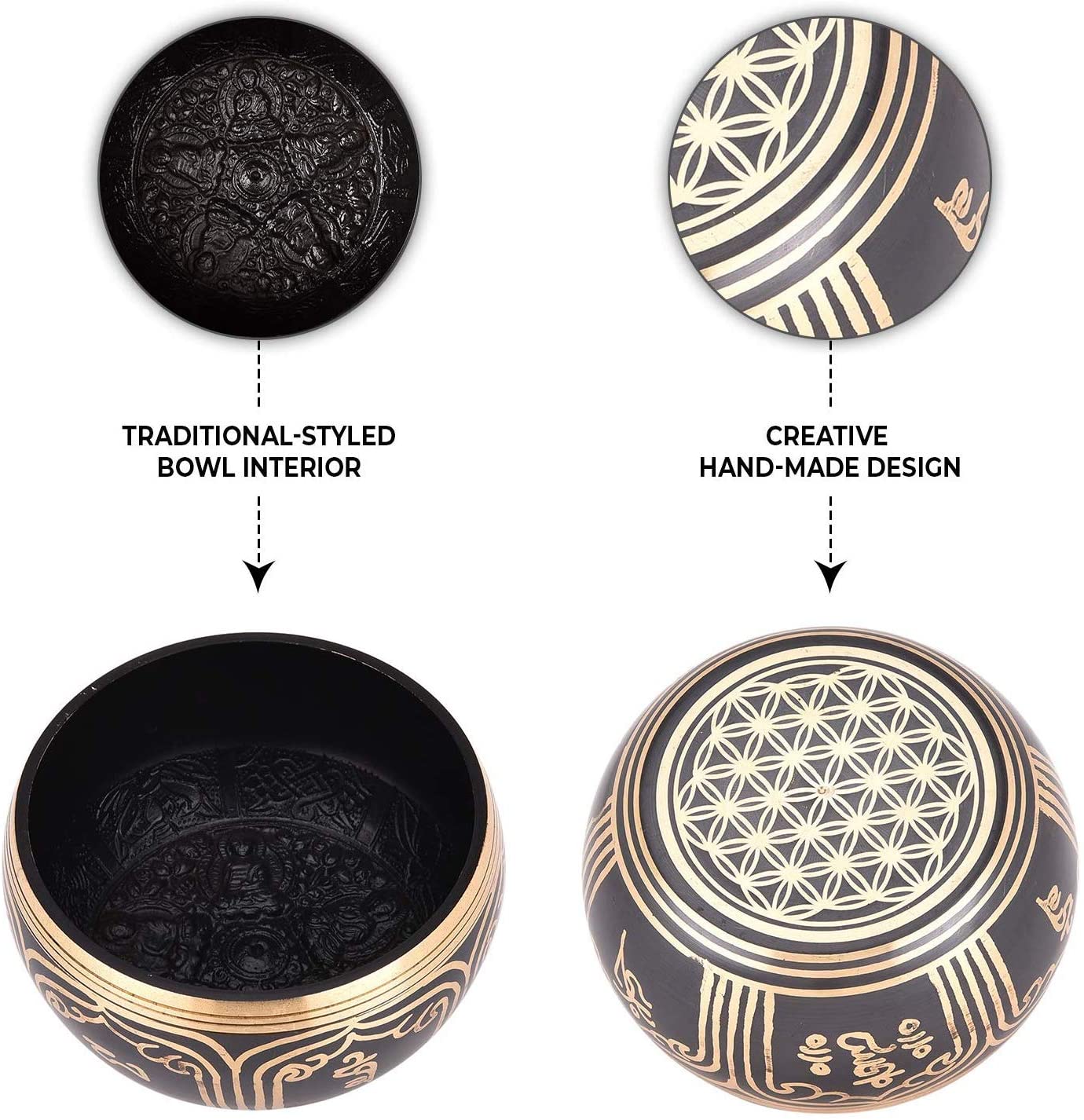
If you are like many other people, you have had to improvise a space. Maybe one corner of the office, den, or bedroom is now a contemplation space- and that is okay! Make tight spots all yours with our placid Blue Colour singing bowl. The unique finish is calming but adds character to space.

Since kids love colorful, shiny objects, they’ll want to play it, too. Therefore, it’s a top pick for teachers and families.

The Modern Minimalist

Are you inspired by sleek, elegant lines? Is a singing bowl all you need to recharge energy levels and boost confidence? Then our Power and Strength singing bowl will fit right in at home. The smooth black finish is tough to make, but we think Silent Mind’s artisans have done an exceptional job.

The Everyday Meditator

Meditation and mindfulness are no big deal; it is just your lifestyle. You probably do not even have a dedicated space for your practice. For those who love a singing bowl that sounds and looks good absolutely everywhere, you’ll love the classic, bestselling Balance and Harmony design.

The Yoga Lover

Yoga studio? Your home is a yoga studio. There is always space to roll out your mat, and you do not call it ‘naptime’- it is just savasana. From pranayama to chanting to hours of relaxing yin, the Peace Mantra singing bowl will be right by your side with an inspiring message.

Wednesday, August 5, 2020

How to Take a Tibetan Singing Bowl Sound Bath at Home

Sound baths are a truly transcendent way to relax. A sound bath is a meditative practice where we immerse ourselves in healing sound, most often singing bowls. It’s a sound therapy session that can help us destress, refresh, and even enjoy biological benefits like lower blood pressure.

Many new-wave sound bath lovers discover them in corporate settings or meditation centers. However, you can create a soothing sound bath on your own at home. Today, we’re telling you exactly how.

Preparing a Home Singing Bowl Sound Bath

Naturally, the most important ingredient for singing bowl sound bath. If you have a collection, this is the perfect time to bring them all out and alternate creating sounds for your bath.

Using bowls of varying sizes and sound adds dimension. If you’re looking to shift energies in your home as well as the body, multiple tones and frequencies can enhance the effect. We recommend our classic bestseller collection as well as our quartz crystal chakra singing bowl series.

If you’re looking for a particular size and sound, you can even order a custom singing bowl. Silent Mind singing bowls are always authentically made by artisans in Nepal using locally sourced materials from the Himalayas.

If you only have one singing bowl, that’s fine. There are no rules when it comes to the number or size of singing bowls used for a sound bath.

Once you choose your spot, make it comfortable. A folded blanket or low cushion on the floor is suitable to sit on while playing. Some people also prefer low natural lighting, aromatherapy, candles, and any other type of ambiance they find relaxing.

Arrange your singing bowls around your sitting spot and prepare to clear the energy of your space in the way you choose. You could smudge with sage, start by ringing Tingsha bells or strike a higher-pitched singing bowl.

TAKE A SOUND BATH

Once you’re seated, take a moment to set an intention and decide what you want from your sound bath. If you could command your singing bowl to emit a particular kind of energy, what would that be?

Sit and meditate on this for a minute, taking full, even breaths. Now begin to play, alternating bowls or playing techniques in whichever sequence or pattern feel right to you. Strike one and let it ring while you make another sing, or alternate striking and playing the rim of one solitary singing bowl.

As you play, do your best to stay relaxed. Be mindful not to tense the shoulders or ask too much of your wrists.

One of the greatest things about creating a sound bath is what it can do for others in your home. Let anyone else present lay in savasana while you play; children especially may prefer this to regular old naptime. Plus, they’ll be a lot calmer afterward.

If you’re not quite ready to dive into making your own sound bath yet, Silent Mind has you covered. We’ve added some meditation tracks to Spotify which is a good introduction. Be sure to wear headphones for an immersive experience.

Tuesday, August 4, 2020

Singing Bowls And Kids: Making Time At Home Mindful


Wondering how you’ll keep the kids occupied this summer? Currently, struggling with schooling and entertaining them at home? Singing bowls easily fit into lesson plans, routines, and rules of the house. If you want to make time at home more mindful – but not more boring- check out some ways our kids are using singing bowls.

A Music Lesson

Teaching kids about the arts at home doesn’t have to cost a fortune. Unlike other musical instruments, singing bowls are relatively inexpensive and easy to play. Listen to some singing bowl tracks online and have your little ones try to recreate the sounds along with the recording.

For kids who do have experience with musical education, have them identify what note their singing bowl plays. Have them experiment with different playing techniques to alter the sound, or play other instruments like gongs, bells, and chimes to accompany the singing bowl.

A Reward

Little ones love praise and acknowledgment for good behavior. And in the long term, it reinforces that good behavior. If you’re homeschooling right now, try using a singing bowl as a reward. When your child gets an answer right or behaves, invite them to strike the singing bowl. It’ simple, but incredibly fun for small kids who love an opportunity to make a little noise.

Over time, they’ll build positive associations with the sound. Later in life, they’ll have no problem turning to a singing bowl to boost their mood and destress.

Games

Tibetan Singing bowls can even be incorporated into mindful listening games. Play your singing bowl around the rim, and have the kids listen carefully for the second that the sound fades away completely. At the moment the sound disappears, they either sit down or if sitting, raise their hand. This type of engagement is good for keeping kids in the present moment.

Relaxation and Quiet Time

Naptime is a struggle. If your children insist they’re not tired and fight taking a rest, try this. Instead of saying its naptime, do a few yoga postures. Downward dog, butterfly, and child’s pose are all good beginner postures they can do. Finish with savasana, where the child will lie down on their mat with their eyes closed. Begin playing the singing bowl as you encourage them to relax, not “nap”.

Chances are, they’ll drift off to sleep- whether they meant to or not.

Singing bowls are good for bedtime too, as a simple ritual that signals things are winding down at home. At Silent Mind, we keep different singing bowls for all purposes- one for mindful listening games and music lessons, one for routines and rewards, and one for naps and bedtime.

Are you currently homeschooling, and what are your biggest challenges? Do your kids practice mindfulness or play the singing bowl? When did they first start using a singing bowl? Let us know in the comments, and share your own ideas for other parents!

Friday, July 31, 2020

Amazing Singing Bowl Meditations to Try This Week

Do you listen to guided meditation tracks or singing bowl sound baths at home? At Silent Mind, singing bowls are more than meditation tools. Their song is the soundtrack to all daily activities.

It’s great to sit or lie down with the intention to meditate. Routine and discipline are essential to deepening practice. But singing bowls stand out for their ability to be enjoyed at any time. They always add their soothing, meditative quality to everything we do.

There’s nothing like a soft crystal singing bowl sound bath to quell anxiety and fear. This session is just over an hour long.

As the creators at Healing Vibrations say, “With so much pain and fear happening on a global scale right now, we feel it is more important than ever to create something that can help our hearts cope. So with this quarantine time, we wrote our own sound bath with love and heart stimulation as our intention and guide…We hope you can enjoy these waves as the rings stimulate our cells and allow our body to fully absorb the sounds that merge with our being.”

The artisans at Silent Mind create shiny new singing bowls using many traditional, even ancient, techniques. But we still know how to appreciate the otherworldly vibration of an antique bowl. In fact, many collectors who shop with us keep some truly special antique pieces in their collections as well.

Despite the age of the bowls, this two-hour track feels timeless. The creators, temple sounds, say, “All bowls are Antique Chakra notes and will impact through the subconscious mind to heal and rejuvenate as well as relax the body, mind, and soul.”

The sound of rain is calming for many of us, whether we need sleep or just a peaceful, slow-paced day. Nu Meditation Music’s rain and Tibetan singing bowl track clocks in at over nine hours, so you can enjoy a full day or night of gentle moving water and classic Tibetan bowls.

Their channel helpfully states, “Using Tibetan Singing Bowls for healing is based on the idea that all illness or disease is characterized by a hindrance to the flow of energy in the body. When energy flow is hindered, the organ or tissue in question stops vibrating at a healthy frequency, and thus it results in some kind of weakness or illness. The sound frequencies created by Tibetan Singing Bowls restore and optimize the flow of energy in the parts of the body where this is required.”

Thursday, July 30, 2020

Yogalates With Silent Mind Singing Bowls

Is your usual mode of movement feeling a little stale? Are you just going through the motions with your daily yoga practice? Mix it up a bit with a fast, efficient yogalates routine.

Yogalates is a combination of yoga and Pilates. Like yoga, Pilates tends to be low-impact, with a focus on core strength and correct posture.

That said, the strength-building component is more intense than many yoga flows. This is why yoga practitioners love Pilates, too; it is a fast-track to a stronger core, which helps them access more challenging yoga asanas.

Plus, it can help you tone up a little faster than many styles of yoga if that’s one of your goals. The main benefit of adding yoga to Pilates is that yoga helps us improve flexibility better than perhaps any other exercise. Flexibility preserves mobility and makes other types of activity and movement safer for our joints and muscles.

Whether or not you’re new to Pilates, yoga, or both, know this- they require patience and mindfulness. Yoga and Pilates ask us to settle into position, engage certain areas of the body and stay trained on our breath. So if you’re looking for active mindfulness practice, look no further.

Our friend Desiree at Dansique Fitness recently shared the perfect yogalates routine. Best of all, it clocks in at just under 30 minutes!

This beautiful yogalates flow starts just right with a Silent Mind singing bowl. The sound of a singing bowl has long been used to mark the beginning and end of any practice that’s sacred to the user.

From there, we begin warming up with some gentle, easy yoga postures. They lead into even more lengthening and gently strengthening postures until the real core work begins. While it isn’t too intense for cautious beginners, this was a good time to revisit and improve upon our side plank!

The final third of the flow is particularly invigorating, as it centers on a popular yoga inversion- plow pose. As we stimulate blood flow to the heart and head, we enjoy moderately paced, highly controlled leg-toning Pilates movements.

Finally, our workout is capped off by a brief seated stretch and a nice, relaxing savasana.

If you want the satisfying, relaxed-yet-accomplished feeling we had after this routine, try it today. You can also check out more videos from Dansique Fitness, which offers plenty of ballet barre-based fitness and HIIT (high-intensity interval training) sessions to complement your flexibility-fostering yoga practice.

The hardest part of any wellness routine is starting. Last week, we went over some ways that we can keep ourselves on track with at-home movement. It’s worth revisiting some of those suggestions as you give yogalates a try this week.

How often do you exercise, or engage in mindful movement? Have you ever tried yogalates? How do incorporate your Tibetan singing bowl into your yoga or exercise routine? We’d love to hear your thoughts below!

Wednesday, July 29, 2020

Tibetan Singing Bowls: An Introduction

The origins of singing Tibetan bowls are as mysterious as the otherworldly harmonies the bowls produce when we play them. There are more questions than answers: Where did they first come from? What are they made of? How have Tibetans and other cultures used them through the centuries? Why are they known as Tibetan singing bowls?
What we do know is this:
• Tibetan singing bowls are not Buddhist in origin, but more likely date back to the pre-Buddhist Tibetan Bon Culture. Although there is no hard evidence to indicate the origins or use of the bowls, it is commonly thought that they were traditionally used both in rituals and, more mundanely, as food bowls.
• Singing bowls are actually a type of bell known as a “standing bell.” The bowls are played either by rubbing a mallet around the rim (as one might play a crystal glass with your finger), or striking the side of the bowl with the mallet. The two playing methods produce quite distinctive sounds.
• Though they are often referred to as Tibetan Singing Bowls, they are more accurately called Himalayan Bowls, as they are present throughout the Himalayan regions of Tibet, Nepal, India. They can also be found in various manifestations in Japan, Korea, China, and Mongolia.
• Today, singing bowls are used to aid meditation, religious practice, relaxation, and healthcare.
• When used in sound healing, singing bowls are sometimes referred to as healing bowls or chakra bowls. In sound healing, or “sound massage,” the bowls are played around and sometimes placed on the body of the receiver of the treatment. The practitioner uses the resonance of the bowls’ harmonic vibrations within the human body for balancing and relaxation. Some sound healers seek to activate or balance the body’s chakras, or energy centers.
• The “singing” sound is remarkable, a powerful, long-lasting harmonic hum that can be both invigorating and calming at the same time.
• The traditional methods of producing the bowls have been lost for at least 50 years, but the manufacturing methods used today can produce bowls with beautiful tones. Today, bowls are both hand-hammered and machine-made, or a combination of the two. The best modern bowls are considered to come from Nepal.
• Modern bowls are most likely to be made of a type of bronze called “bell metal,” composed of a mix of copper and tin.
• Antique bowls were also typically made of high-quality bronze, with combinations of various other metals, including gold, silver, and even highly-prized meteoric iron, which the Tibetans call “sky-metal” or thogcha. The presence of multiple kinds of ore is thought to be the source of the multiphonic overtones of some antique bowls, and along with the mellow tones created by age, accounts for the high value placed on antique singing bowls.
• It can be very challenging to tell the difference between a true antique singing bowl and a new bowl, as it is relatively easy to “age” the appearance of a new bowl so that it closely resembles an antique. High-quality new bowls are capable of beautiful tones, but only age can produce the richest, mellowest tones. Only a handful of experts in the world can authenticate the age and value of singing bowls, so you should use caution with sellers who offer “antique” or even “old” bowls without evidence of authentication.
And if you’re interested in experiencing Tibetan culture in Lhasa, you can learn how to travel to Tibet here.

Friday, July 24, 2020

Tibetan Singing Bowl

To make sound with a Tibetan singing bowl, solidly press the going with a little hammer in a round movement against the bowls outside edge or edge. At the point when you hear a brilliant, clear tone, you can hinder the movement and your all stress gone. Utilize your full arm to move, as opposed to simply pivoting your wrist, gives you amazing vibes.
The sound mending can you with clearing lively blockages and hence encourage recuperating on physical and mental health. A portion of the advantages of sound treatment includes lower feelings of anxiety and less emotional episodes.

Benefits, you get with Tibetan Singing Bowl’s sound

  1. Relief from all stress issues
  2. Get rid of depression problem
  3. Decreases pressure and uneasiness essentially
  4. Brings down annoyance and circulatory strain
  5. Improves course and builds bloodstream
  6. Profound unwinding and help with discomfort
  7. Increments mental and passionate lucidity
  8. Advances quietness, bliss, and prosperity
The sound from Tibetan Singing Bowls entrains the cerebrum to move into the Theta cerebrum wave frequencies that initiate profound reflective and tranquil states, lucidity of psyche, and instinct. The sound vibrations away from our sensory system, drawing in our unwinding reflex and hindering the pressure or torment reaction. The sound gives you positive vibes to make your mental as well as physical health well.

Wednesday, July 22, 2020

Why Buy Tibetan Singing Bowls From Silent Mind?


When you buy one of our bowls, not only are you choosing an authentic product that has been handcrafted just outside Kathmandu, you are also supporting the Nepalese economy, which is still in recovery after the devastating earthquake of 2015.
A cataclysmic earthquake struck the country in April of 2015. It registered 7.8 on the Richter Scale and took the lives of 9,000 people, while an additional 22,000 were injured.
Kathmandu’s economy suffered heavily, especially with the quake’s impact on tourism, their lifeblood. Nepalese locals are desperate for business and many have resorted to crafts.
Helping a Nation Rise from the Rubble
Donation is a wonderful thing, but buying local products- such as their beautiful Tibetan singing bowls– helps stimulate the economy and bring back people’s livelihoods and sense of purpose.
We are committed to seeing through the recovery of Nepal from this horrific ordeal, ensuring we fairly negotiate our pricing arrangement with our manufacturer, who we have developed a great friendship with.
To that end, we will continue to cultivate our business relationship for many years to come. We want to be part of the new community that rises from this rubble. Hopefully, we can bring our friends from the Western world into the fold, too.
We thank you greatly for being a part of that effort. We thought it was critical that you know how much more you are doing as you enjoy your singing bowls.

Rocufast Premium Colon Cleanse Capsules: A Step Above the Rest

Digestive Support, Improved Colon Health, and Complete Digestive Detox all in one!
Our premium, colon detox pills will aid you in flushing out harmful toxins leaving you feeling energetic and revitalized!
A perfect and fast 15 day cleanse that is as effective on the first day of the detox as it is on the last! Our formula includes essential digestive enzymes and beneficial probiotics that will have you another step closer to your health goals! Our natural, organic colon cleanse capsules are packed with numerous benefits for the whole body! Check out some of the key benefits of adding a colon cleanse and detox supplement to your supplement cycle!
KEY BENEFITS OF A COLON CLEANSE:
– Natural Energy Boost*
– Flushes Waste and Toxins Out of your Body
– Promotes Digestive Health
– Bloating, Gas, and IBS Relief*
Quality You Can Trust
Our colon cleansing capsules are all-natural for maximum results. Our women and men supplements are free from additives and dangerous ingredients so you can rest assured that it’s the best you can find. Rocufast complete colon cleanse is non-GMO and formulated in the USA so it is 100% safe!
For best results, pair with a healthy diet and exercise!
That complete colon cleanse you have been looking for is here!
Product Features
• THE COMPLETE COLON CLEANSE SUPPLEMENT: A complete 15-day colon detox that will not only improve your overall digestive and colon health but will also rid your body of waste and boost your daily energy levels!
• COLON CLEANSE AND DETOX FOR INCREASED ENERGY: Toxins and unneeded waste can build up in the body and colon, causing fatigue and low energy levels. Cleanse those toxins and feel energetic and revitalized!
• COLON HEALTH PROBIOTIC: Our unique colon cleanse probiotic will promote overall digestive health. Supporting bloating relief, gas relief, ibs relief, and increased healthy bowel movements!
• FAST-ACTING, POTENT INGREDIENTS: Our formula goes to work fast to ensure that you are cleansing and detoxing your body for all 15 days. Complete body detox and cleanse that will leave you feeling amazing!
• MADE IN THE USA: Our customer’s health and satisfaction is our top priority. That is why all of our supplements are formulated right here in the United States in an FDA registered and GMP certified facility. No added preservatives, non-GMO.

How To Use Your Singing Bowl Every Day

At Silent Mind, there’s always a singing bowl playing, whether we’re testing out a new design, or taking a wellness break. Still, we realize that for some of our customers, using a singing bowl regularly is a new concept.
We believe that singing bowls are one of the most rewarding, powerful tools you can keep on hand. That’s why we’d like to share some of our favorite ways to use them daily.
This way, you’ll get the most value out of your singing bowl. Eventually, you might notice you’re getting more than you dreamed possible.
Meditation
Many new friends come to us looking to deepen their meditation practice. Like us, they’ve been captivated by the research asserting that meditation is an effective way to cope with stress.
Even if you only meditate for a few minutes daily, open and close your sitting with a few strikes of the bowl. If you have trouble quieting the mind, try a sound meditation instead.
Begin as you normally would in terms of posture and setting, but play your singing bowl throughout the sitting. Whether you’re striking or playing around the rim, focus on the sound and vibration, especially as it ebbs and flows under your direction.
Bedtime
Historically, singing bowls have been used to mark a transition in a ritual or practice. Today, we hear from grateful teachers all over the world who use our singing bowls in their classrooms to accomplish something quite similar.
Singing bowls are ideal for gently heralding anyone into a different activity or state of mind. You may not be a teacher, but you can use singing bowls every evening to mindfully transition your children into bedtime mode.
Yes, it works for adults, too. Sleep is our body’s time to rest and heal. There’s no better way to send your body the message that it’s time to settle in than with the sound of a singing bowl.
Inspiration
Getting stuck or feeling at a loss for what to do are common human experiences. Often, all we need is to take a step back and clear the mind. In these moments, the best course of action can present itself.
Singing bowls are an excellent way to get focused. The sound and vibration cancel out more chaotic frequencies that can cloud our judgment.

Monday, July 20, 2020

Tibetan Singing Bowls: What and How to Play Singing Bowls in Tibetan Buddhism

Tibetan music bowls, often called “singing bowls”, are a kind of bell used in Tibetan Buddhist meditation. Instead of hanging upside down and being struck, the bowl sits upright, and a wooden puja stick is used to vibrate the rim of the bowl, making its unique “singing” sound.
These bowls have been used in Tibetan Buddhism for centuries, and are an integral part of learning the Buddhist teachings as well as being used in meditation to attain enlightenment.
Origin and History
The origin of the singing bowls is lost in the mists of time. There are many debates on where they first came from, and many say that bowls made of the same materials came from ancient Mesopotamia. Similar bowls made from the same seven metals that have been unearthed in Persia (now Iraq) have been dated to be as old as 3,000 BC. However, since there are no written records of their origins, one can only speculate on the mystery of their beginnings. Some say that the great master, Padmasambhava, brought them to Tibet from India in around 800 AD. What is known is that the bowls could not have originated in Tibet, since the precious metals that are used in the making of the bowls are not found in the region.
One thing that is known is that the bowls have been made in Nepal for over a thousand years, with Nepali artisans hammering the seven metals into one alloy by hand, and shaping them into the bowls that are seen in the monasteries of Tibet. Therefore, the name Tibetan Singing Bowls does not denote the makers but are named for the peoples who used them. However, while the bowls are definitely Himalayan made, they were never Himalayan in origin, and this technology came to the Himalayas very late in Tibet’s history.
Making of Tibetan Singing Bowls
Tibetan singing bowls have been made the same way for centuries, but the art has since been lost during the move to more modern methods. Bowls are made more these days by machines, although they fail to get the perfect tone that the hand-made bowls achieve. Traditionally, the bowls were made by hand, hammering out their shape from sheets of metal alloy. Bowls that are more modern are mostly made from a kind of bronze alloy known as “bell metal”, which is a mix of copper and tin. However, traditionally, the bowls were made from very high-quality bronze, with a mix of other metals. This unique alloy also contained gold, silver, mercury, lead, and meteorite iron. This iron, which is known as thogcha, or “sky metal” in Tibet, was highly prized for its pure iron content, with minimal amounts of trace elements. This could only be obtained by meteorite iron, as the atmospheric burn-off removed many of the impurities in the ore.
The quality and composition of the bowls, using multiple metals in the alloy, is thought to be the reason for the high quality of sounds from the antique bowls. Combined with age and design, these three elements are what make the antique bowls so sought-after in the modern market. While modern bowls can produce beautiful sounds, they cannot compare with the unique quality of the antique bowls.

Tibetan Singing Bowl Meditation gift

According to Tibetan oral tradition, the existence of singing bowls dates back to the time of the historical Buddha Shakyamuni (560 – 480 B.C.) The tradition was brought from India to Tibet, along with the teachings of the Buddha, by the great tantric master Padmasambhava in the 8th century A.D.
Singing bowls produce sounds that invoke a deep state of relaxation which naturally assists one in entering into meditation, the ultimate goal being enlightenment. They are a quintessential aid to meditation and can be found on private Buddhist altars, and in temples, monasteries and meditation halls throughout the world.
Spiral Singing Bowl Meditation Gift Box Set- 4″
Metallurgical analysis of bowls vary, from a predominantly two metal alloy of copper and tin with trace iron content to an eight alloy of copper and tin with traces of iron, lead, zinc, gold, silver, and mercury.
In addition to their traditional usage for meditation, Tibetan singing bowls are used for deep relaxation, stress reduction, holistic healing, Reiki, chakra balancing, and World music. Many people find that the rich blend of harmonic overtones that the bowls produce has a direct effect on their chakras.
Playing the bowl usually causes an immediate centering effect. The tones set up a “frequency following response” that creates a balancing left/right brain synchronization. Meditating on the subtle sounds of the Tibetan singing bowl tunes one in to the universal sound within and without.
Previously used in Tibet for meditation and ceremonial purposes, Tibetan Singing Bowls are struck with a mallet or rubbed around the rim to produce a fascinating blend of harmonic resonance and rich overtones. Generally, smaller diameter Singing Bowls have higher tones, while the larger bowls produce a wider dynamic range of sound with rich deeper Om tones.
Peace Singing Bowl Meditation Gift Box with Pillow
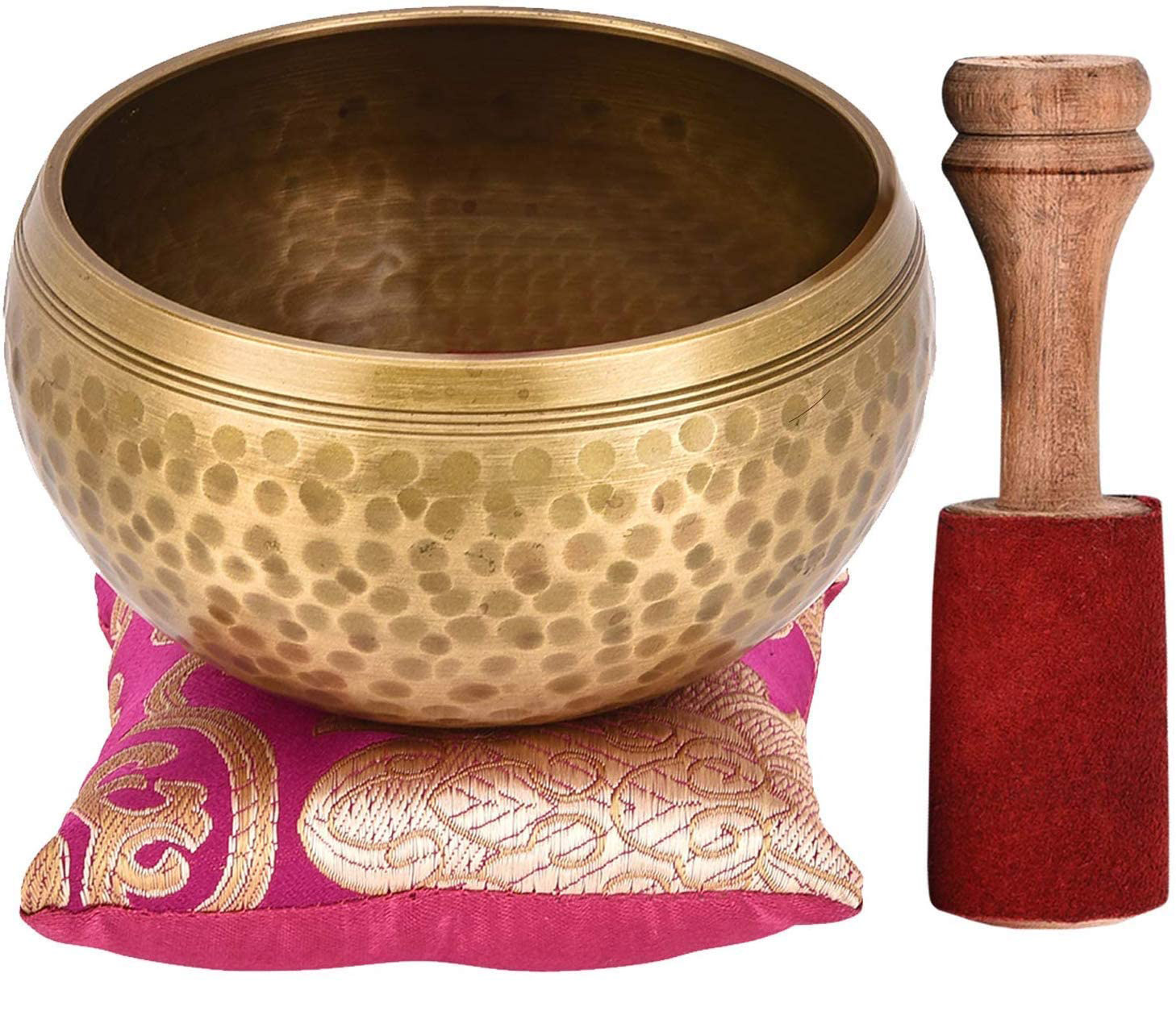
Our Tibetan Singing Bowls come in sizes from our mini bowls at 2 inches in diameter to larger bowls 11 inches in diameter. Each Tibetan Singing Bowl comes with a wooden mallet. Many come with their own Singing Bowl Cushions typically made of silk-brocade and cotton. But if not, we also have cushions available and sold separately in many colors and sizes. Many of our bowls are sold in beautiful lotus paper boxes making them perfect for gift giving.

Friday, July 17, 2020

Singing Bowl Mallet Meditation

Every singing bowl sound sample recorded on our web site has been played with the following variety of mallets. Tibetan Singing bowls can sound completely different whether they are struck with wool, leather, or wood; and you can isolate completely different tones depending upon the mallet and the playing technique you use. All of the mallets produce different sounds from the bowls and learning which ones to use with which bowls- and how to use them- is an ongoing discovery.
Back in the late ’70s’ in Kathmandu, we know the Nepalese played singing bowls with Roti sticks. Historically, any plain wood dowel may have been used. But the harsh sound created by the wood striking the metal also had the effect of sharply kicking up the female overtone and hence burying the deeper, more subtle sound of the fundamental tone. Hence, the wool padded mallet!
WOOL PADDED MALLET
This wooden mallet, semi-padded with monk’s wool, softens the struck sound of a singing bowl. A Bodhisattva basic, the padded mallet is designed to bring all of the bowls’ frequencies up to at equal volume. We played with different thicknesses of the dowel, which is made of Sheesham, a Himalayan hardwood. In time, we found if the dowels were roughly 30 mm. thick, that was about right for producing a balanced struck tone in most medium-sized singing bowls and even some of the Highwalls as well. This type of mallet produces most of the bowl strikes you hear in the recordings on our web site. The wooden handle provides a rimming surface as well.
HOW TO USE IT FOR STRIKING
Using the wool padded end, strike the Tibetan singing bowl on its mid-exterior wall, or on the interior upper wall. Acoustically, upper octave tones carry louder than deeper tones, due to their increased saturation of sound waves. So when we strike a singing bowl with a padded mallet, we hear the richness of the fundamental tone much more clearly in the mix. Avoid striking the bowl on the top of the lip, as this will produce too much of a percussive hit.
HOW TO USE IT FOR RIMMING
  1. Sit as if you were sitting for meditation, with your spine straight and relaxed, your shoulders level and your breath generous but natural. Make sure to release any unnecessary tension in your arms, shoulders, and face, as Tibetan singing bowls are bio-feedback instruments and they tend to be really quiet when we’re holding tension in our bodies.
  2. Hold the singing bowl on the palm of your non-dominant hand, with your fingers energized and held closely together. This is important so that your fingers and thumb do not involuntarily wrap around the base of the bowl while playing, which will dampen the sound. Hold the bowl about Solar Plexus level, slightly tilted so that the aperture of the bowl is opening into the direction where your mallet is coming from.
  3. With your dominant hand, grasp the mallet in its center and hold it as if you were about to sign your name with the wooden end of the mallet. Make sure the covered part of the mallet is snuggled securely in the web between the thumb and the index finger, and that there is never any gap there while playing. So your grasp on the mallet should be firm but never strained.
  4. Position the mallet at a 35% angle against the outside edge of the lip of the bowl. With an even pressure, rub the mallet in at least 4 or 5 revolutions, or until you begin to hear the female overtone build. Use a full arm motion, like you’re stirring a pot of soup. Try to keep your wrist as straight as possible.
  5. Once the female overtone starts to comes up bright and clear, reduce your speed and press a little bit more firmly. If you hear “chattering” against the lip of the bowl, either reduce your speed, even more, increase your pressure, or both. Watch the bowl as you continue to rub the rim, and listen to the bowl’s voice. Adjust your angle, pressure, and speed accordingly. When you bring it all together, the female overtone should sound sweet and clear.
Although it is tempting to close your eyes when first starting to play, I find that it’s helpful at least in the beginning to keep them open and to observe what you’re doing carefully. This practice also gives the focus necessary to clear the mind. If there is chatter on the inside lap of the circle, check to see if your angle and speed are consistent all 360 degrees. Once the tone is even and smooth and you’re really connected to the bowl- then close them if you like.